To continue our celebrations of St. Patrick's Day, have a look at some traditional (though a bit stylized) Irish dancing in its two major forms. First, the soft shoe dance:
And second, the hard shoe dance:
For me, Irish music and dance are absolutely unique and captivating.
Tuesday, 17 March 2015

Thursday, 12 March 2015
Sir Terry Pratchett
Sad news again :( Fans around the world are mourning the loss of one of the most brilliant men - Sir Terry Pratchett. His writing was full of wit, wisdom and kindness all at once; his sense of humour was really exquisite and second to none. The cruel irony of his illness, which attacked this sparkling intellect, is unacceptable and unbearable. Characteristically, he called his condition (early onset Alzheimer's disease) "embuggerance", and faced it with incredible dignity and courage. Hera are a few of his sentences, about humans and about Death, one of his favourite characters in Discworld:


"Human beings make life so interesting. Do you know that in a universe so full of wonders, they have managed to invent boredom."
The trouble with having an open mind, of course, is that people will insist on coming along and trying to put things in it.
"Wisdom comes from experience. Experience is often a result of lack of wisdom."
If you want more, there are some brilliant quotes to be found
We are lucky to have his many books to go back to, and to continue our conversation with him.
Tuesday, 10 February 2015
Ready for St Valentine's?
Use the controversial holiday to learn a few useful words that describe people's feelings to one another. It would be a good idea to find some examples for each of the phrases to see how they are used in context. Google away! :)


Friday, 30 January 2015
British politeness
One of the key things in learning English is getting the rules of politeness. They are really very unique, and require a lot of analysis on both sides of the conversation. If you think adding "PLEASE" to your requests, for example, is enough, you are in for a big surprise. Have a look at some phrases that are used every day. Some are a bit tongue-in-cheek, but not as much as you would have thought. It's all about understatement, both in negative and positive messages being communicated. Have a look! :)
| WHAT THE BRITISH SAY | WHAT THE BRITISH MEAN | WHAT FOREIGNERS UNDERSTAND |
|---|---|---|
| I hear what you say | I disagree and do not want to discuss it further | He accepts my point of view |
| With the greatest respect | You are an idiot | He is listening to me |
| That's not bad | That's good | That's poor |
| That is a very brave proposal | You are insane | He thinks I have courage |
| Quite good | A bit disappointing | Quite good |
| I would suggest | Do it or be prepared to justify yourself | Think about the idea, but do what you like |
| Oh, incidentally/ by the way | The primary purpose of our discussion is | That is not very important |
| I was a bit disappointed that | I am annoyed that | It doesn't really matter |
| Very interesting | That is clearly nonsense | They are impressed |
| I'll bear it in mind | I've forgotten it already | They will probably do it |
| I'm sure it's my fault | It's your fault | Why do they think it was their fault? |
| You must come for dinner | It's not an invitation, I'm just being polite | I will get an invitation soon |
| I almost agree | I don't agree at all | He's not far from agreement |
| I only have a few minor comments | Please rewrite completely | He has found a few typos |
| Could we consider some other options | I don't like your idea | They have not yet decided |
Wednesday, 28 January 2015
Clash of the titans ;)
Recently we talked about Philip Roth and his long career (with my 2MA group). We also watched a trailer for The Humbling, another film adaptation of Roth's work. To understand the clip below you should know that most of these adaptations have not been very successful, probably because of the complexity of Roth's narration and language. These are not simple stories to tell on the screen, which is perhaps why the author's attitude to the idea of another attempt is not very enthusiastic. Here is a story of how Al Pacino met Philip Roth, right after he had bought the rights for the book to be made into a film.
For those of you who have not seen the trailer, here it is:
For those of you who have not seen the trailer, here it is:
Thursday, 8 January 2015
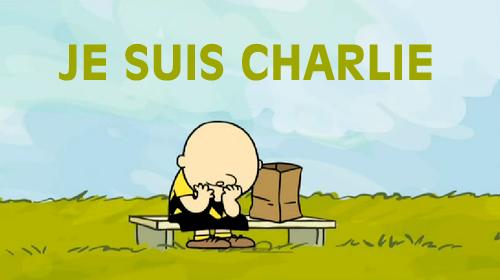
Friday, 2 January 2015
R.I.P. Stanisław Barańczak
Very sad news arrived right after Christmas: Stanisław Barańczak has died. He was a genius poet and translator of Polish poetry into English and English poetry into Polish. For example, his Shakespeare is absolutely brilliant, effortless and funny (where it should be, of course). Let me divert from the usual format of our blogs, then, and include two samples of Baranczak's genius (in Polish) - a darker one, and a lighter one.
First, his poem:
Nazajutrz
Nazajutrz po kolejnym
zbiorowym samobójstwie zawsze tak samo
idzie się rano po gazety,
zawsze tak samo bieli się świeżo
spadły śnieg albo wschodzi
czyściutkie słońce letniego poranka, zawsze
tak samo dzwonią butelki z mlekiem i
pachną rogaliki, zawsze tak
samo mała dziewczynka z tornistrem
biegnie do szkoły i potyka się, i pada,
i tłucze kolano, i jest dużo płaczu, i w tym płaczu
jest zawsze
tak wiele życia
(11 II 76)
Now, to see and appreciate his humour, read these "Twitter"-like summaries of Shakespeare's plays"
Podstawowe utwory Williama Szekspira, przystępnym sposobem streszczone i dla celów mnemotechnicznych w formę wierszowaną przyodziane:
"HAMLET"
Duch: brat jad wlał do ucha.
Syn ducha: o, psiajucha!
Stryja w ryj? Drastyczny krok.
Zwłoka. Jej finał: stos zwłok.
"ROMEO I JULIA"
Rody Werony: wraży raban.
Młodzi: hormony. Starzy: szlaban.
Mnich: lekarstwem zielarstwo?
Finał: trup grubą warstwą.
"OTELLO"
Tło: gondole i doże.
Centrum uwagi: łoże.
Wąż: Jago. Mąż: "Ja go!…" Duszona:
Żona. Finał: obsada kona.
"MAKBET"
Szkot: bestia bitna.
Żona: ambitna.
Ręce umywa. Ma gdzieś.
Bór: marsz na mur! Finał: rzeź.
"KRÓL LEAR"
Król ojciec: lebiega.
Błazen: go ostrzega.
Córki: dwie złe, jedna lepsza.
Finał: wszystko się rozpieprza.
Subscribe to:
Posts (Atom)